Steep Driveway Maintenance Tips for Black Creek Homes
November 6, 2025
November 6, 2025
Own a home in Black Creek with a driveway that feels more like a ramp? You are not alone. Chattanooga’s sudden downpours and occasional ice can turn a steep drive into a safety and maintenance challenge. In this guide, you will learn simple steps to protect your surface, manage runoff, improve traction, and plan seasonal upkeep that supports safety and resale value. Let’s dive in.
Chattanooga’s humid subtropical climate brings heavy rain, hot summers, and occasional winter freezes. Those swings stress pavement, speed up erosion on slopes, and can open cracks that let water into the base. You can confirm these local weather patterns in the NOAA climate summaries for Chattanooga.
Many hillside lots in and around Black Creek have shallow soils over clay or weathered rock. Clay can shrink and swell, and even small flows of water down a steep grade can move gravel or erode edges. Guidance from the University of Tennessee Extension and USDA NRCS supports routing runoff off the driveway quickly and keeping subsurface water away from the base and retaining walls.
The surface you choose affects traction, upkeep, and lifespan. On steep grades, you need both texture and protection from water intrusion.
Asphalt offers a smooth ride and can handle continuous slopes well. Inspect yearly and sealcoat every 2 to 3 years based on sun exposure and wear. For best practices, review the Asphalt Pavement Alliance’s maintenance guidance and the Asphalt Institute’s technical advice. Always seal cracks first so water does not reach the base.
Concrete can last for decades when properly jointed and supported by a stable subbase. Ask for a broom finish, exposed aggregate, or grooving to improve grip on steep sections. Choose a penetrating silane or siloxane sealer to repel water without creating a slick film on the surface.
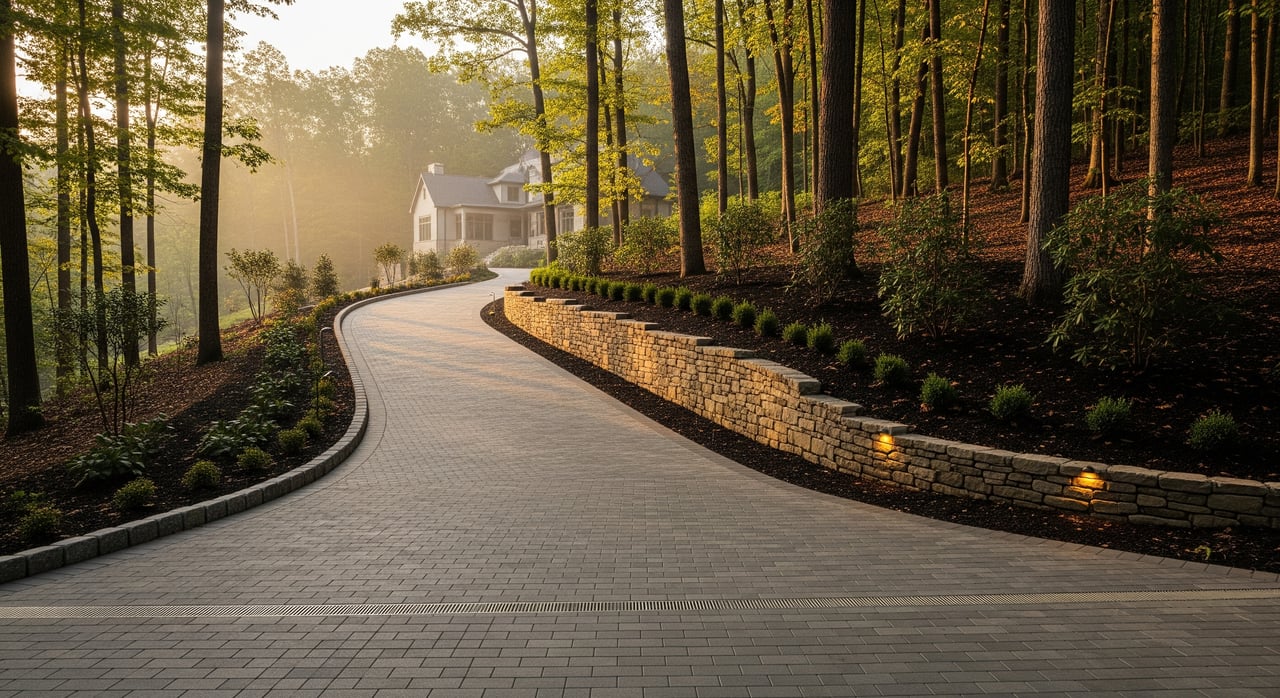
Interlocking pavers offer strong texture and easy spot repairs. Permeable pavers or pervious concrete can reduce runoff, but steep slopes require engineered bases and solid edge restraints so the base material does not migrate. Consult experienced contractors for steep installations.
Water is your driveway’s biggest risk on a slope. The goal is to move water off the surface fast and route it safely.
Use a slight crown or side slope to shed water. On steep drives, shallow side swales move water off the surface better than letting it run down the middle. Short, level “interceptor” pads or curb edges can slow flow and direct it to a swale or inlet before it gains speed. You can find core principles in FHWA drainage guidance.
French drains or curtain drains behind walls and under edges help relieve pressure and keep water from undermining the driveway. Retaining walls should include gravel backfill, filter fabric, a perforated drain, and weep holes. The USDA NRCS practices and UT Extension resources outline effective techniques for slopes and drainage.
Winters are usually mild, but thin ice or freezing rain can make a steep driveway unsafe. Plan ahead so you are not stuck on a slick slope.
Salt works quickly but can harm concrete, metal, and landscaping. Less corrosive options exist, but they can be costly. The EPA’s overview of road salt impacts explains the tradeoffs.
Use the minimum effective amount and sweep up leftover abrasives to protect drains and plantings. For broader winter practices, check TDOT winter operations guidance.
Shoveling or using a snowblower is safer on steep slopes than trying to drive during an event. In some cases, heated driveway systems can reduce slip risk and the need for chemicals. Review the Energy.gov overview of snow-melting systems for costs and considerations. If you explore this option, confirm feasibility on your specific slope and surface.
A simple yearly rhythm keeps your driveway safe, attractive, and ready for showings.
Driveways set the tone before a buyer steps inside. Standing water, crumbling edges, or slick finishes can raise safety questions and lead to inspection requests. A clean, textured surface with clear drainage signals care and reduces negotiation pressure. Keep receipts and contractor contacts for any major work to share with potential buyers.
Bring in a licensed civil engineer or qualified site contractor if you see repeated settlement, recurring cracks that reflect base movement, undermining, or retaining wall bulging. Complex drainage regrading, new retaining walls, or heated systems may require permits; check local rules before you start. Resources from UT Extension, FHWA, and NRCS can help you ask the right questions.
Ready to align your driveway plan with your home goals? If you are buying, selling, or preparing for market, Melissa pairs practical construction insight with a clear plan for curb appeal and value. Let’s talk through your options and next steps. Connect with Unknown Company to get started today.
Stay up to date on the latest real estate trends.


Get assistance in determining the current property value, crafting a competitive offer, writing and negotiating a contract, and much more. Contact me today.